The use of motion capture in live dance performances has created an emerging discipline enabling dancers to play different avatars on the digital stage. Unlike classical workflows, avatars enable performers to act as different characters in customized narratives, but research has yet to address how movement, improvisation, and perception change when dancers act as avatars. We created five avatars representing differing genders, shapes, and body limitations, and invited 15 dancers to improvise with each in practice and performance settings. Results show that dancers used avatars to distance themselves from their own habitual movements, exploring new ways of moving through differing physical constraints. Dancers explored using gender-stereotyped movements like powerful or feminine actions, experimenting with gender identity. However, focusing on avatars can coincide with a lack of continuity in improvisation. This work shows how emerging practices with performance technology enable dancers to improvise with new constraints, stepping outside the classical stage.
Fan Zhang, Molin Li, Xiaoyu Chang, Kexue Fu, Richard William Allen, RAY LC
Year
2025
Video Presentation (CHI’25)
Workshop Process
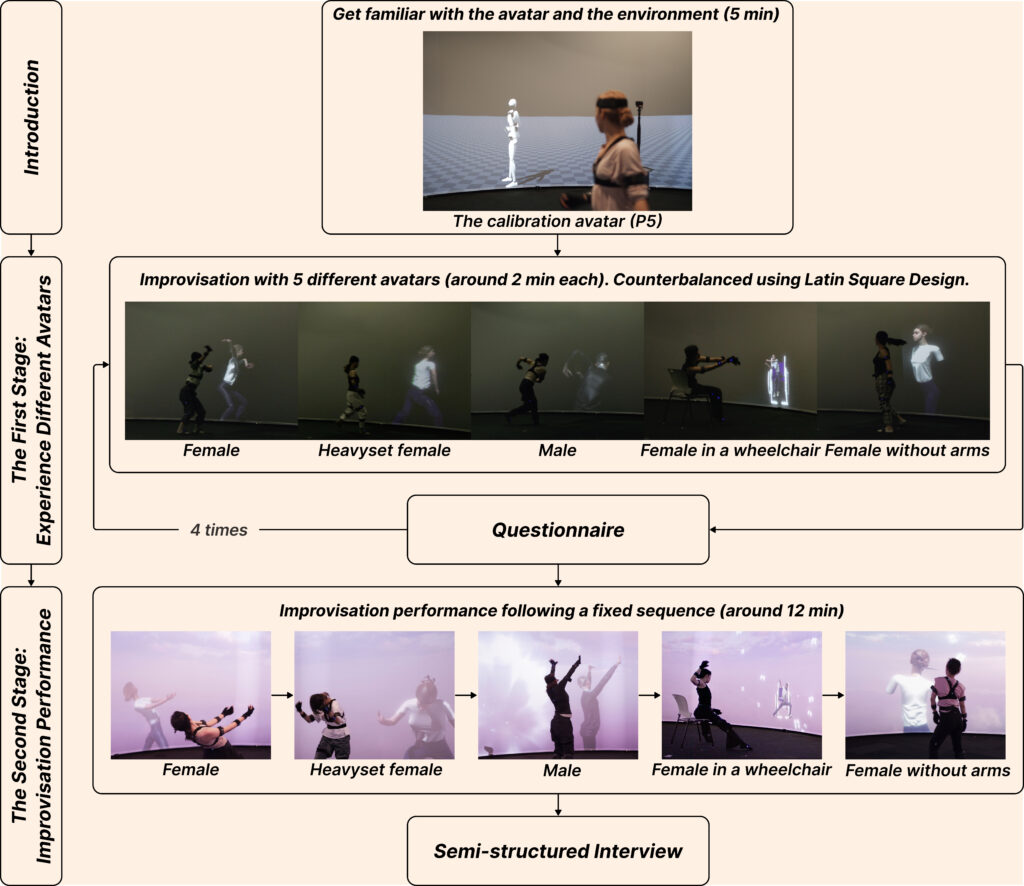
We conducted in-person workshops with 15 non-disabled professional dancers (12 female, 3 male).
Data Collection and Analysis
Semi-structured interviews (qualitative coding)
Improvisation videos (computer vision analysis)
Embodiment questionnaire (paired samples T test)
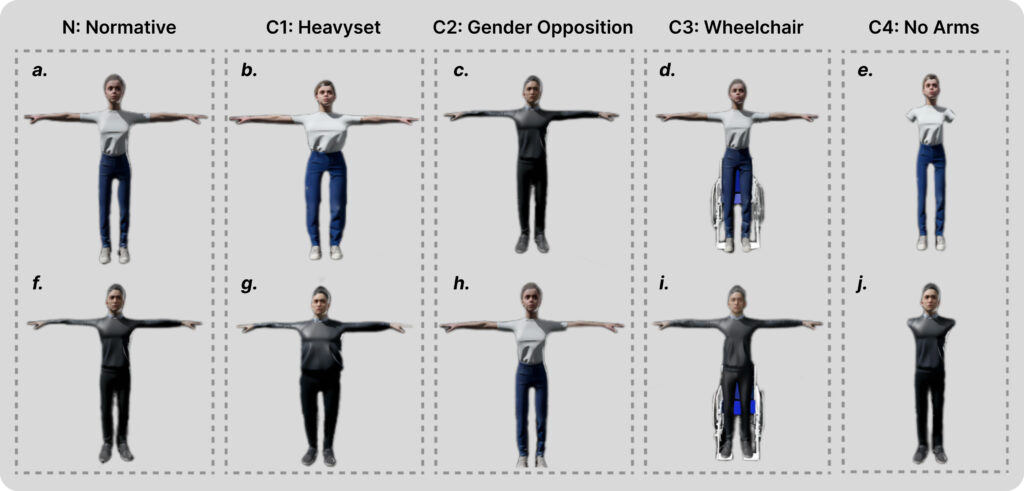
Avatars
Each dancer improvised with 5 different avatars:
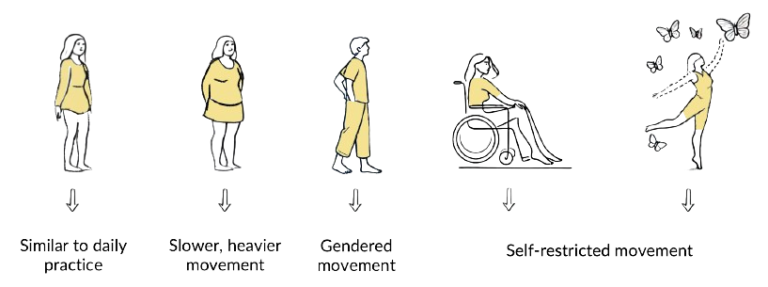
normative, heavyset, gender opposition, wheelchair, and no arms avatar.
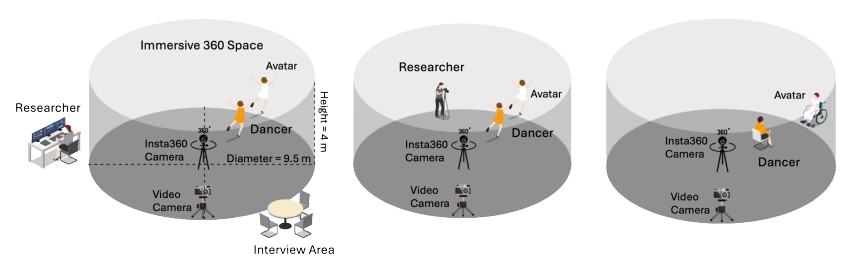
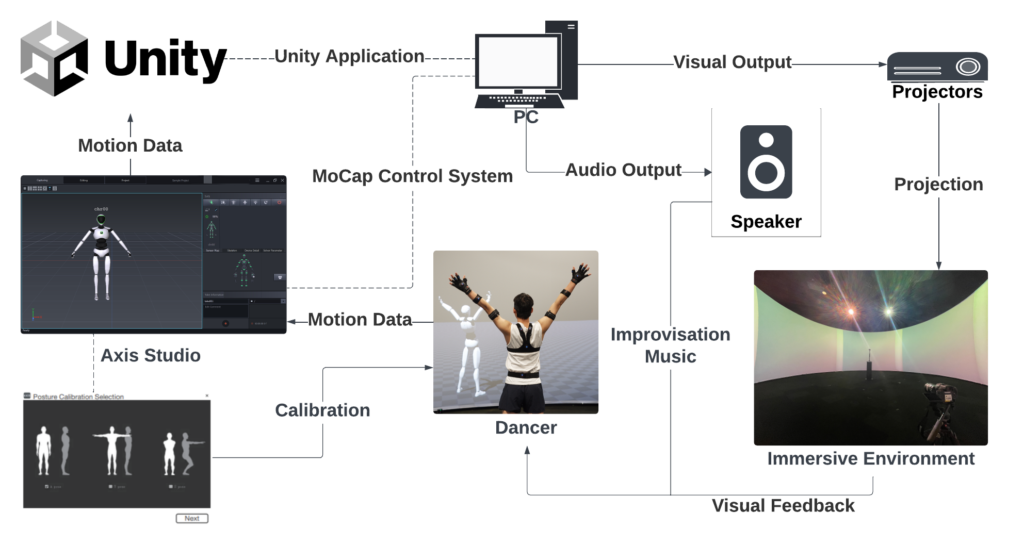
Platform and System Setup
One dancer improvised with avatars in the environment.
Key Findings
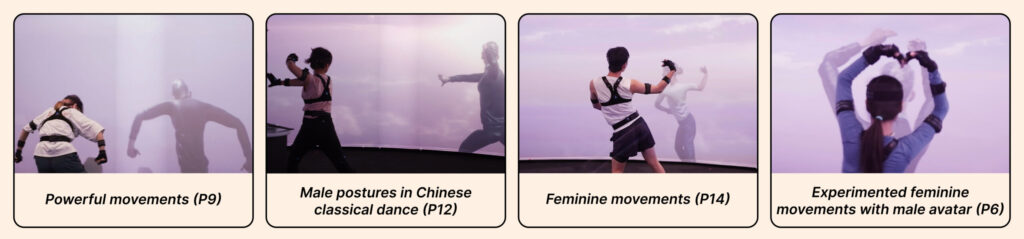
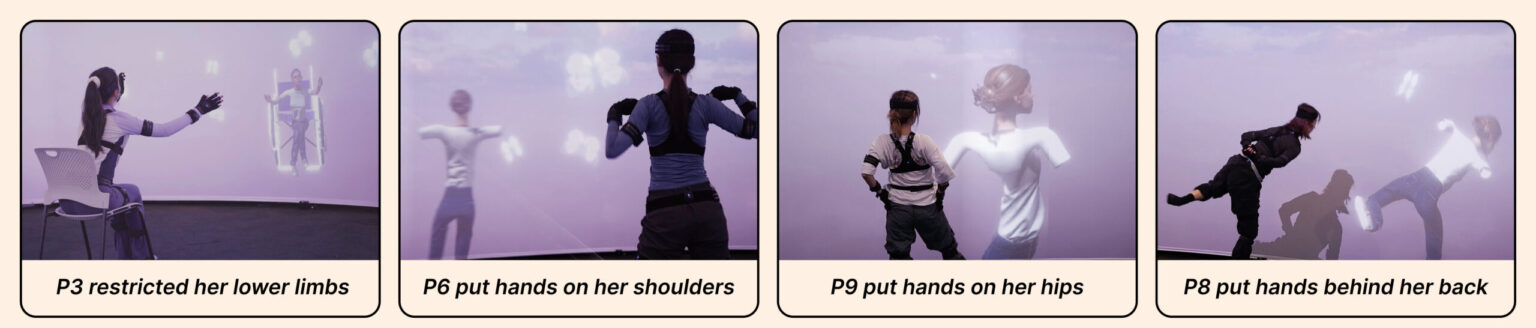
1. Defamiliarization Effect: Dancers distanced themselves from habitual movements due to different features of avatars.
Gender opposition
Avatars of physical limitations
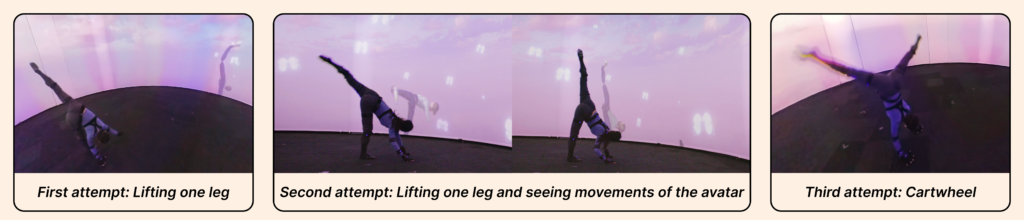
2. Creativity from constraints
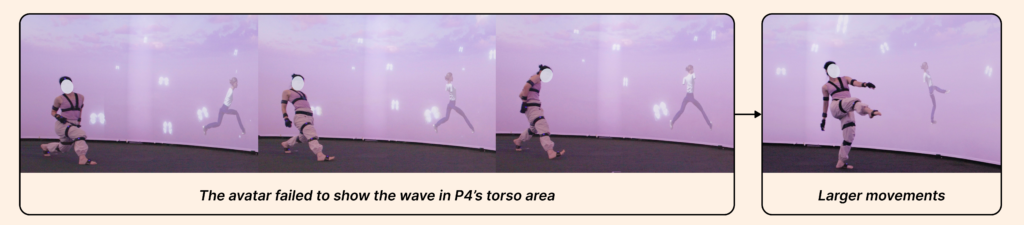
Dancers adapted to physical constraints of avatars and technical constraints using their own ways.
3. Different defamiliarization effects due to perceived different roles of avatars
As extended self, it allows dancers to become their own audience, guiding their movement in an intuitive way.
As dance partners, it is difficult for dancers to establish connections with them like with human partners due to the lack of physical sensations and constant feedback.
Reflections
With avatars, we have the potential to support movement-based representations of underrepresented groups in dance.
With avatars, we may breakstereotypes and norms towards different identities in real life.
We propose several design implications for using avatars in dance:
Incorporating multi-sensory feedback and facial expressions in realistic humanoid avatars to make it closer to human partners.
Using abstract avatars to embrace the abstract nature of kinaesthetic creativity.